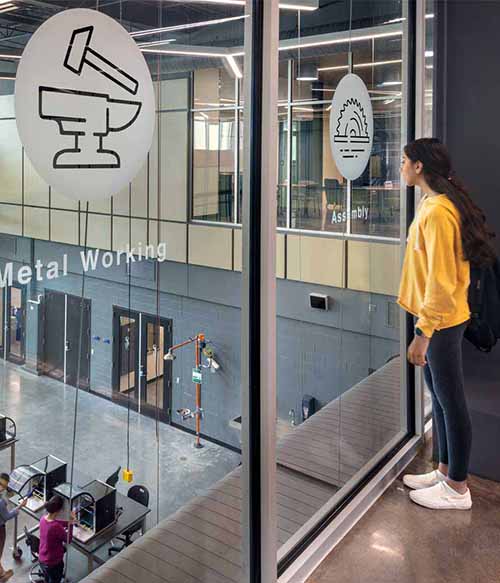
Engineering
Are you a problem solver who loves to tinker? Open the door to unlimited career options with our Engineering program. With a focus on real-world experience and industry-related technology, our courses will prepare you to take on challenges and make a difference in the world.
Why Engineering at san jac?
Start your future in engineering with a program that fits your goals. At San Jac, you can choose between two pathways: Engineering Technology (AAS), which focuses on hands-on, applied skills for the workforce, or Engineering (AS), which prepares you to transfer to a four-year university. In either path, you’ll build problem-solving skills and gain the technical knowledge needed to succeed in a variety of engineering fields.

Turn ideas into real-world solutions

Strengthen your problem-solving mindset

Work with modern tools and technologies
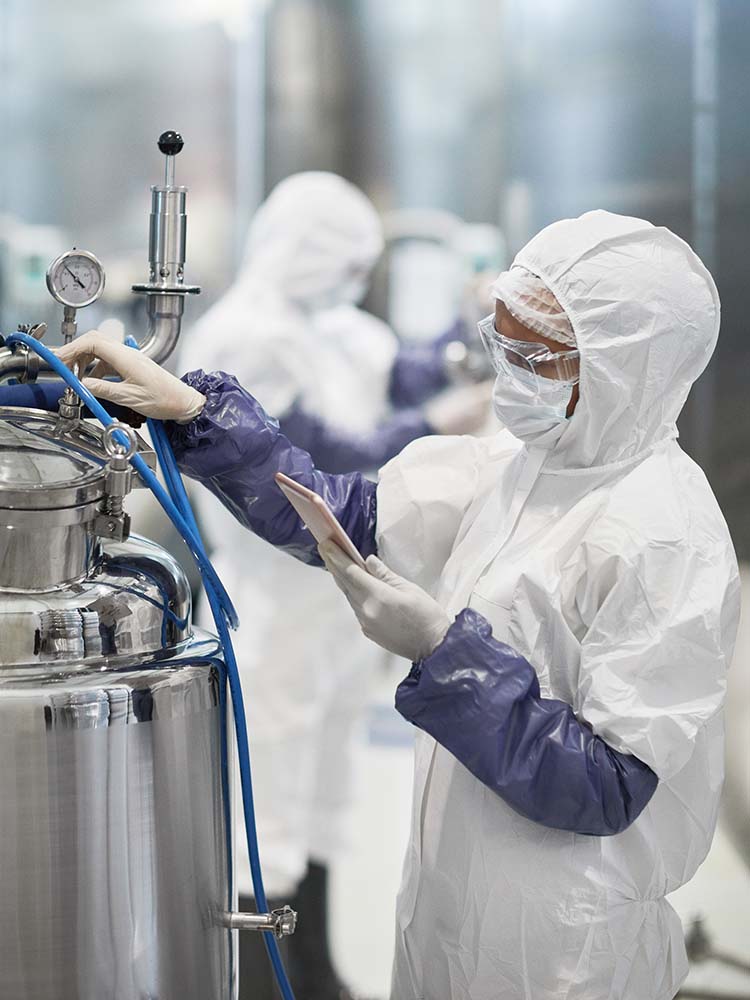
Explore a wide range of engineering careers
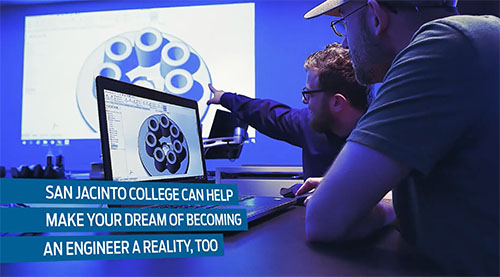 Play Video
Careers
Technicians
Technicians
Our program prepares you to become an engineering professional in several fields:
- Civil engineering technician
- Environmental engineer technician
- Mechanical engineer technician
- Civil engineer
- Aerospace engineer
You can work on designing things like water systems, highways, manufacturing systems, bridges, computers, and even toys!
DEGREES & CERTIFICATES
Automated Manufacturing, Certificate of Technology
The Automated Manufacturing Certificate of Technology prepares you for technician roles in automated production settings. You’ll get hands-on training in robotics, programmable logic controllers (PLCs), electronics, and manufacturing processes. You’ll learn how to operate, maintain, and troubleshoot automated systems while following industry safety and quality standards.
Engineering Technology, AAS
Engineering, AS
Manufacturing Foundations, Occupational Certificate
The Manufacturing Foundations Occupational Certificate introduces you to key manufacturing concepts, including safety, materials, measurement, technical drawings, and basic production processes. You’ll get hands-on training to build the skills needed to support manufacturing operations. This program also prepares you for advanced study in manufacturing or engineering technology.
CAREER TRACKS
The content below shows a flowchart of the career tracks.
After San Jacinto College

Sounds great, but how do I apply?
Your Questions Answered
It depends on your goals.
- If you want to start working sooner in a hands-on role, the Engineering Technology (AAS) path may be a good fit.
- If you plan to transfer to a four-year university and become an engineer, the Engineering (AS) path is the better choice.
Both paths build strong problem-solving skills and prepare you for careers in engineering-related fields.
Engineering focuses more on theory, design, and advanced problem-solving. Engineers often need a bachelor’s degree or higher.
Engineering technology focuses on applying those ideas in real-world settings. As an engineering technology student, you’ll learn how to build, test, operate, and maintain systems. Engineering technicians are often hired with a two-year associate degree.
You may work closely with engineers to bring designs to life, run tests, collect data, and help improve processes.
In the Engineering Technology (AAS) program, you’ll build practical, hands-on skills used in the field. Topics may include:
- Safety and tools
- Electricity and electronics
- Computer-aided design (CAD)
- Materials and manufacturing processes
- Quality assurance and system reliability
You’ll learn how to work on a project from start to finish, from initial plans to final production.
The Engineering (AS) program is designed for transfer to a university. You’ll build a strong foundation in:
- Math and physics
- Chemistry
- Engineering fundamentals
These courses prepare you to continue into a bachelor’s degree in fields like mechanical, civil, electrical, chemical, or biomedical engineering.
Yes. The Engineering (AS) degree is designed to transfer to Texas public universities.
San Jac also participates in the Voluntary Mechanical Engineering Transfer Compact, which helps ensure your credits transfer to participating schools if you’re accepted into a mechanical engineering program.
Keep in mind that you’ll still need to meet the admission requirements of the university, such as GPA or testing requirements.
The Voluntary Mechanical Engineering Transfer Compact includes 77 percent of Texas public universities that offer mechanical engineering and 75 percent of public community or technical colleges that offer lower-division engineering courses. This agreement helps ensure your credits transfer if you’re accepted into a participating university’s mechanical engineering program.
Engineering skills are used in many industries. Depending on your path, you could pursue careers in:
- Mechanical engineering
- Civil engineering
- Electrical engineering
- Chemical engineering
- Industrial engineering
With an Engineering Technology degree, you may work in roles that support engineering teams, helping build, test, and maintain systems.
Yes. You can begin with shorter certificates that build into the Engineering Technology (AAS) degree. The Manufacturing Foundations Occupational Certificate introduces basic skills used in manufacturing, safety, and production.
From there, you can continue into the Automated Manufacturing Certificate of Technology. This will help you develop more advanced skills in automation, systems, and equipment used in modern manufacturing environments.
These certificates are part of a stackable pathway. As you complete the Manufacturing Foundations and Automated Manufacturing certificates, you’ll build skills that apply directly to the Engineering Technology AAS degree.
This allows you to gain experience, earn credentials along the way, and continue working toward a degree at your own pace.

Support for your studies